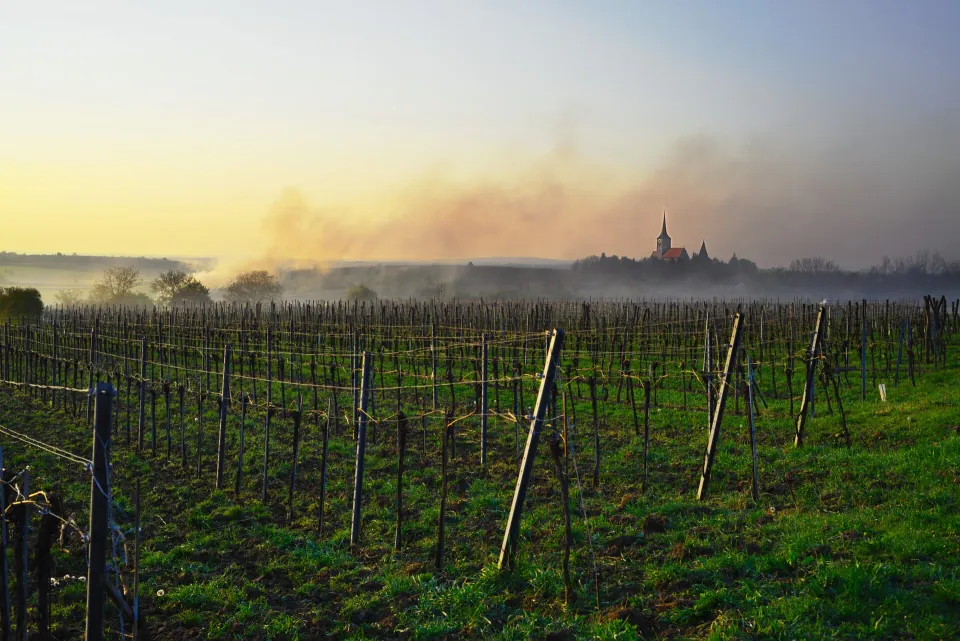
In Beaune the date of the harvest has been written down since 1354: in church records, town registers and newspapers, 664 years without a gap. The series shows that for six centuries the pickers set out at the end of September; since 1988 they have started about two weeks earlier on average, and 2003, 2011, 2018 and 2020 are among the earliest years on record. Few data sets show the warming of Europe as plainly as this one.
More sugar, less acidity
The grape ripens faster in a warm year: more sugar, so more alcohol; less acidity; aromas of jam rather than fresh fruit. Bordeaux reds that had 12.5 % vol in the 1980s now often reach 14. Extremes do more damage than averages: the late frosts of April 2017 and April 2021 destroyed a large part of the crop from the Loire to Vaud and Graubünden; hail, drought and heat strike more often; and the wildfires of 2020 in California and in Australia left “smoke taint” in the wines, an ashtray note that no filter removes.
To drop at the apéro
Beaune has written down its harvest date every year since 1354: since 1988 the pickers have started about two weeks earlier than in the six centuries before.
The map is moving
The map is moving. Champagne houses have planted in southern England: Taittinger at Domaine Evremond in Kent, Vranken-Pommery in Hampshire, and English sparkling wine from Sussex and Kent now wins blind tastings. Growers climb: in Valais, the terraces of Visperterminen reach about 1,150 metres, among the highest vineyards in Europe, and new plantings in the Alps go higher every decade. Classic appellations change their rules: since 2021 Bordeaux and Bordeaux Supérieur may plant six new varieties on trial, among them the Portuguese Touriga Nacional and Alvarinho and the heat-loving Marselan.
The other answer grows in Swiss nurseries. PIWI varieties (from the German Pilzwiderstandsfähig, fungus-resistant) are crosses that need few or no fungicide sprays, which matters more as wet springs and warm autumns bring mildew: Agroscope in Changins released the red Divico in 2013 and the white Divona in 2018, both children of Gamaret and the resistant Bronner. Elsewhere growers shade their grapes with leaves, pick at night, plant on north-facing slopes or return to late-ripening grapes their grandparents gave up.
What it means for the vintage
For the reader: vintages are less uneven than they were, the reds are richer, and the cool-climate classics, Mosel Riesling, Champagne, Swiss Pinot Noir, no longer struggle to ripen. The winners and losers of the next fifty years are being drawn on the map now.