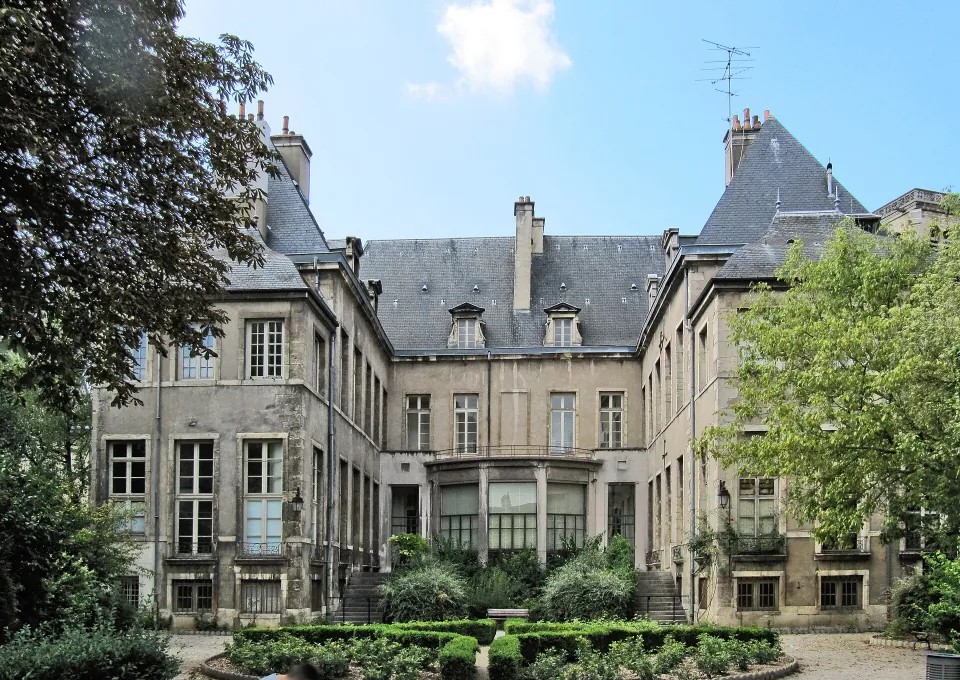
What is wine, actually? The answer is not in a dictionary but in the resolutions of an organisation most wine drinkers have never heard of. The OIV was founded in Paris in 1924, when eight wine countries, among them France, Italy, Spain, Portugal and Greece, agreed after the First World War on an Office international du vin: it was to bring order to the trade, fight fraud and pool the science. In 2001 the office became the International Organisation of Vine and Wine, an intergovernmental body with about 50 member states today. Switzerland is one of them. The United States, by contrast, left in 2001 and did not join when the new organisation was created.
No laws, but the template
The OIV makes no laws, but almost every wine law copies from it. Its definition lays down that wine comes exclusively from the fermentation of fresh grapes or fresh grape must. Its International Code of Oenological Practices says what is allowed in the cellar, from sulphur to dealcoholisation, and its compendium of methods of analysis is the handbook of the control laboratories, the Swiss cantonal chemists included. The European Union largely adopts its resolutions, and Switzerland aligns its wine ordinance with them. The OIV also publishes the wine world’s figures every year: the planet makes about 230 to 260 million hectolitres a year, depending on frost and heat; Switzerland contributes barely one per cent of that and drinks about three times what it makes.
To drop at the apéro
A competition under the OIV’s patronage may award medals to at most 30 per cent of the wines entered; anyone more generous loses the seal.
For wine drinkers the OIV is most visible on medals. International competitions, from the Concours Mondial de Bruxelles to the big Swiss selections, apply to the OIV for its patronage, and it comes at a price: at most 30 per cent of the wines entered may receive a medal, gold only from a fixed score upwards, and the tasting is blind on a prescribed scoring sheet. A competition that is more generous loses the seal. So if the sticker on the bottle carries the OIV logo, the wine is at least in the top third of its competition.
At Decanter 85 per cent of the wines win a medal; under the OIV’s rule, at most 30 per cent
The share of the wines entered that won a medal at the latest edition.
- capped: at 30 per cent (OIV, Swiss oenologists) or a third (France)
- no cap
- 30 per cent
- in Switzerland
Sources: the organisers; medals of every level divided by the wines the organiser gives as entered. Merit labels and certificates below the medals are not counted. Veritas counts its brandies.
The move to Dijon
In 2024 the OIV celebrated its centenary and moved house at the same time: from Paris to Dijon, into the restored Hôtel Bouchu d’Esterno, inaugurated during the world congress in October 2024. Burgundy had beaten Bordeaux and Reims, which was debated in France almost as fiercely as a vintage. Switzerland has a voice in all of this, usually one for strict definitions. The next time a bottle says “wine”, you will know who guards the word.