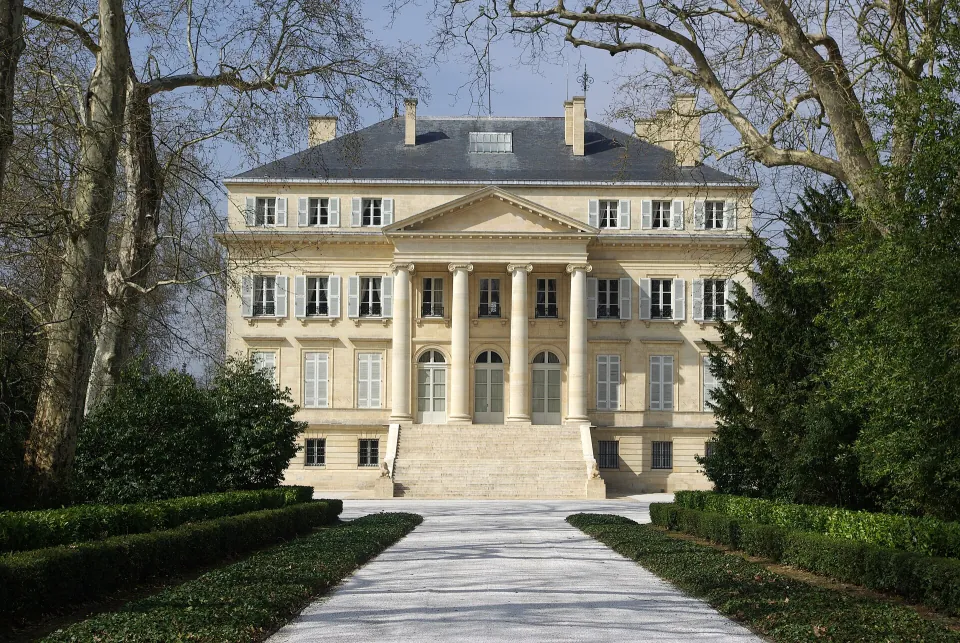
In 1855 Napoleon III wanted to show France’s best wines at the Paris Exposition Universelle. The Bordeaux chamber of commerce passed the job to the courtiers, the city’s wine brokers, and they did what brokers do: they opened their ledgers. In about two weeks they sorted the estates of the Médoc into five classes by the prices their wines had fetched for decades. At the very top stood four names: Lafite, Latour, Margaux and Haut-Brion. Nobody tasted anything to draw up the list.
The exception from the Graves
Haut-Brion is the exception on the list, because it is not in the Médoc but in Pessac, on the edge of Bordeaux, in the Graves. Its price was simply too high to leave out. The reputation is old: as early as 1663 the London diarist Samuel Pepys noted that he had drunk “Ho Bryan”, a French wine with the most particular taste he had ever met.
To drop at the apéro
The 1855 classification was drawn up in about two weeks by wine brokers from market prices, and has been changed exactly once since: in 1973, when Mouton moved up.
Half a century for Mouton
The list was considered untouchable until one man worked on it for half a century. Baron Philippe de Rothschild took over Mouton in 1922 at the age of twenty and could not bear that his estate was only a second growth while Lafite next door, owned by the other branch of the Rothschilds, sat at the top. His motto: “Premier ne puis, second ne daigne, Mouton suis”, first I cannot be, second I do not deign to be, Mouton I am. In 1973 the Ministry of Agriculture gave in, Mouton became a first growth, and the motto changed: “Premier je suis, second je fus, Mouton ne change”. To this day it is the only change at the top of the classification.
Mouton is also the estate of the labels. Since the victory vintage of 1945 an artist has designed the label every year: Dalí, Miró, Chagall, Picasso, Warhol, Francis Bacon, Jeff Koons. Balthus’s nude for the 1993 vintage was refused by the American authorities; the bottles for the United States were left blank. The owners of the five today are two branches of the Rothschilds at Lafite and Mouton, the Dillon family at Haut-Brion since 1935, the Mentzelopoulos family at Margaux since 1977 and François Pinault’s Artémis group at Latour since 1993.
A rank for estates, not vineyards
For the glass this means: the classification ranks estates, not vineyards, and it has never been reviewed since 1855. To get to know the style without paying a first growth’s price, look to the estates’ second wines or to a fifth growth from the same village. The grapes are the same: Cabernet Sauvignon and Merlot, which also grow in Ticino and Valais.