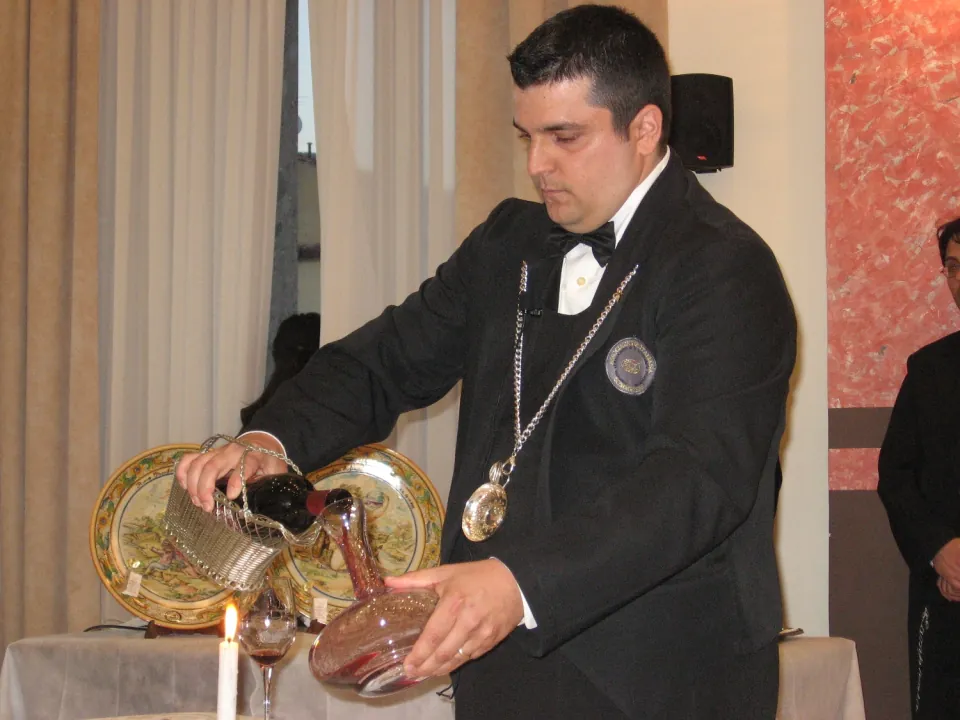
A dining room, three examiners at the table, a bottle of champagne. The candidate opens it without a sound, pours, answers questions about cocktails, cigars and vintages as she goes, and smiles as if it were an ordinary evening. That is the service part of the Master Sommelier exam, and it is only a third. The first such exam was held in London in 1969; in 1977 those involved founded the Court of Master Sommeliers at Torquay as an international examining body, today with two chapters, Europe and the Americas. The diploma is regarded as the highest honour in hospitality, as the Master of Wine is in the trade.
Four levels, three exams
The route runs through four levels: Introductory, Certified, Advanced and finally the Master Sommelier Diploma. The last exam has three parts. Theory is examined orally, without warning, from grape varieties to sake. Service is the scene above. And in the tasting, six wines stand in the glasses, three white, three red, with 25 minutes for the lot: grape, country, region, vintage, argued aloud along a fixed pattern, the “grid”. Whoever passes one part may take the others in the following years. By 2018, since 1969, only about 280 people worldwide had passed all three. The 2012 documentary “Somm” shows what that does to candidates: flashcards in bed, tasting at breakfast.
To drop at the apéro
From the first exam in 1969 to 2018 only about 280 people worldwide passed the Master Sommelier exam, and in 2018 twenty-three newly minted Masters lost the title straight away.
The 2018 scandal
In 2018 a scandal shook the American chapter. Shortly after the results were announced, it emerged that an examiner had told at least one candidate which wines were in the tasting. The board annulled the tasting for everyone; 23 of the 24 newly minted Masters lost the title, and only one kept it, because he had passed the tasting the year before. Fees were refunded and a retest offered. For an institution that lives on a myth of incorruptibility, it was a deep crack.
What separates the Master Sommelier from the Master of Wine? The place. One works with the guest, the other at a desk. For you it means this: a sommelier who asks about your budget and then recommends something you did not know is doing exactly what the Court examines for. Identifying wines blind is a sport; good advice is the job.