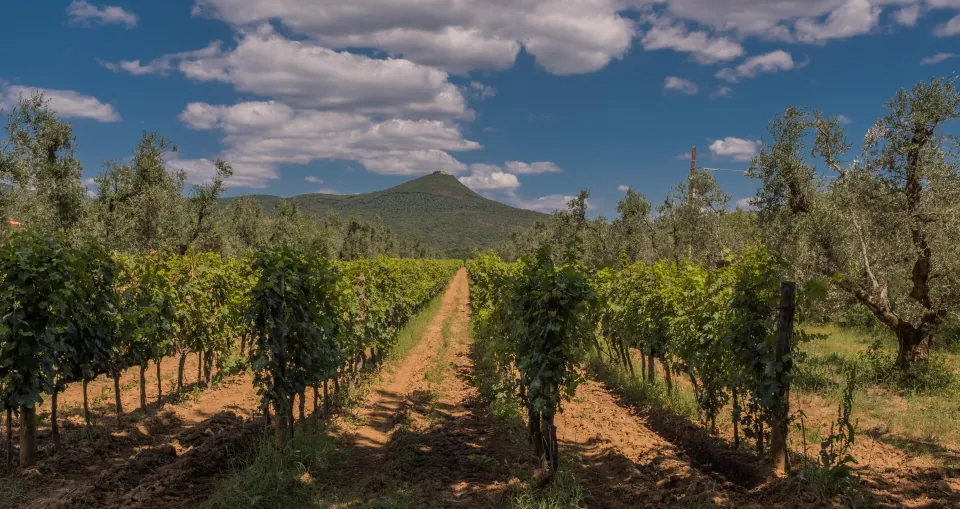
Sassicaia means “stony place”, and the story begins with a man who mainly bred racehorses. Marchese Mario Incisa della Rocchetta had drunk Bordeaux in his Piedmontese youth and wanted to make such a wine on his wife’s estate at Bolgheri, a corner of the Tuscan coast that then meant nothing for wine. In 1944 he planted Cabernet Sauvignon, cuttings said to have come from Château Lafite, on a stony slope that reminded him of the Médoc. For twenty years the wine stayed in the family, drunk at the estate and judged too austere by most guests.
The turning point came through family
The turning point came through the relatives. The marchese was related by marriage to the Antinoris, and Piero Antinori sent his oenologist Giacomo Tachis to Bolgheri. Tachis brought barriques, temperature control and malolactic fermentation, and the 1968 vintage was the first to be sold, in 1971. In 1978 the English magazine Decanter held a blind tasting of Cabernets from eleven countries in London, and the 1972 Sassicaia won. Italy suddenly had a wine that could compete with Bordeaux.
To drop at the apéro
Sassicaia is the only wine in Italy with a DOC of its own for a single estate: Bolgheri Sassicaia, independent since 2013, after decades in which it could only be called “table wine”.
A table wine against its will
It just was not allowed to say so. Italian wine law had no appellation for red wine at Bolgheri, and Cabernet was not a permitted variety, so the label read “vino da tavola”, table wine, the lowest rung. The wine press coined the term Super Tuscan for it, soon applied also to Antinori’s Tignanello and other wines that sidestepped the Chianti rulebook. The lawmakers caught up: in 1994 Sassicaia was given its own sub-zone within the Bolgheri DOC, and in 2013 Bolgheri Sassicaia became an independent DOC, to this day Italy’s only one for a single estate.
The wine is still a blend of about 85 per cent Cabernet Sauvignon and 15 per cent Cabernet Franc, aged in French barriques. In 2018 Wine Spectator put the 2015 vintage at number one in its Top 100. The family still runs the estate, and its racing stable incidentally produced Ribot, one of the most famous racehorses of the twentieth century.
Cabernet with sea air
For the glass: Sassicaia is Cabernet with sea air, cooler and spicier than Napa, leaner than many a Bordeaux. To try the recipe for less, pick a neighbour’s Bolgheri DOC or the house’s second wine, Guidalberto. And to find out what Cabernet Sauvignon tastes like in the Alps, look for it in small quantities in Ticino, usually blended with Merlot.